
You smell rotten eggs near the stove. A faint hiss comes from the water-heater closet. Your dog suddenly refuses to enter one room.
Those clues are easy to second-guess. Maybe it is a drain. Maybe the pilot just went out. Maybe the odor will disappear.
Do not wait for certainty. A natural gas leak can cause fire, explosion, or oxygen displacement. Faulty combustion can also produce carbon monoxide, a separate odorless danger.
San Diego homes use gas for cooking, water heating, drying, fireplaces, and heating. One damaged connection can affect the entire building.
This guide explains seven warning signs and the safest response.
What Should You Do if You Suspect a Gas Leak?
Treat any suspected natural gas leak as an emergency. Leave the building immediately, move away from the area, and call 911 or SDG&E from a safe location.
While leaving:
- Do not turn lights or appliances on or off.
- Do not use a phone inside the building.
- Do not light a flame or smoke.
- Do not unplug equipment.
- Do not start a vehicle in an attached garage.
- Do not search for the leak.
- Do not operate gas valves unless emergency responders direct you.
- Do not return until the utility or fire department says it is safe.
The strength of the smell does not tell you how safe the building is. Odor can fade, become masked, or be difficult for some people to detect.
The PHMSA leak guidance likewise advises people who suspect a leak to leave immediately, avoid ignition sources, and call 911 from a safe location.
Why a Small Gas Leak Can Become a Major Emergency
Leaking gas can ignite when it mixes with air and meets a spark. The spark may come from a switch, thermostat, garage-door opener, motor, or static discharge.
Gas can also displace oxygen in a confined space. Faulty combustion may produce odorless carbon monoxide.
This is why “I do not smell anything now” is not an all-clear.
Sign 1: A Rotten-Egg or Sulfur-Like Odor
Natural gas has no useful warning smell in its untreated state.
Utilities add an odorant so leaks are easier to notice. People often describe it as rotten eggs, sulfur, or a strong skunk-like smell.
Even a faint odor deserves action.
Do not walk from room to room trying to locate the strongest point. Gas can travel through wall cavities, cabinets, utility chases, crawlspaces, and shared building areas.
Odor strength can also change because of airflow.
Why You May Not Smell a Leak
Do not depend on your nose alone.
A cold, allergies, medication, smoking, or reduced sense of smell may limit detection. Cooking, paint, cleaners, and drains can mask the odorant.
Take another person’s report seriously even when you smell nothing.
Gas Odor or Sewer Odor?
Drain odor is often strongest at one fixture. Gas odor may appear near an appliance, meter, fireplace, or gas piping.
Do not investigate closely. When unsure, leave and report a suspected leak.
The Pipeline and Hazardous Materials Safety Administration advises people to leave immediately, avoid ignition sources, and report a suspected pipeline leak from a safe location.
If the problem turns out to be a drain odor rather than gas, you can learn more about a smelly drain after the immediate safety concern has been ruled out.
Sign 2: Hissing, Whistling, or Roaring Near Gas Equipment
Escaping gas can create sound.
A small opening may hiss or whistle. A higher-flow release can sound louder or resemble rushing air.
Possible locations include:
- Behind a range
- Near a gas dryer
- Around a water heater
- Beside a furnace
- At a fireplace valve
- Near the gas meter
- Along exposed gas piping
- Around an outdoor appliance connection
Do not lean closer to confirm the noise.
Do not move the appliance. Flexible connectors and fittings can worsen when disturbed.
Leave the building and report the suspected leak.
Normal Appliance Sounds Versus Leak Sounds
Appliances make normal ignition and fan sounds. A new, continuous hiss after the appliance stops is different.
Treat any sound paired with gas odor, damaged piping, or symptoms as an emergency.
Sign 3: Dead Vegetation, Blowing Dirt, or Bubbling Water Outdoors
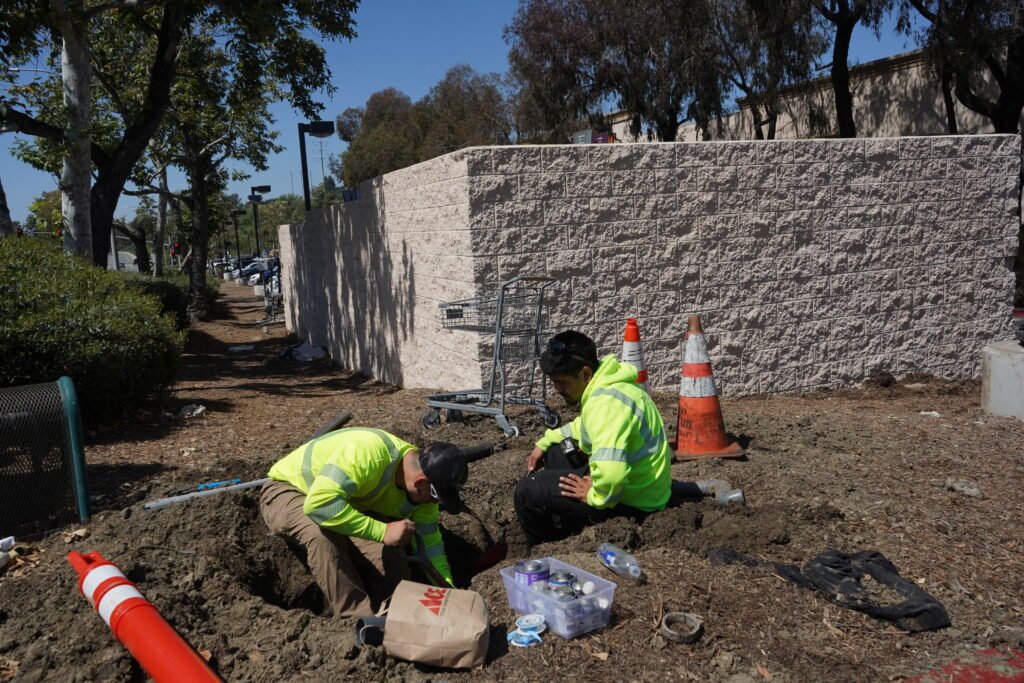
An underground gas leak may leave visible clues.
You may notice one narrow patch of dead grass surrounded by healthy growth. Dirt or dust may blow from a dry area without wind. Water in a puddle may bubble continuously.
These signs can appear near:
- The gas meter
- A buried service route
- Outdoor kitchens
- Pool heaters
- Fire pits
- Detached structures
- Recent excavation
- Landscaping projects
Do not dig to investigate.
Do not drive or park over the area. Do not use electrical landscaping tools nearby.
Move away and call from a safe location.
Not Every Dead Patch Is a Gas Leak
Irrigation problems, chemicals, pests, and disease can also damage plants.
When the patch follows a gas route or appears with odor, sound, or recent digging, treat it as an emergency.
Sign 4: Headaches, Dizziness, Nausea, or Breathing Trouble Indoors
People may notice symptoms before they identify the source.
Warning symptoms can include:
- Headache
- Dizziness
- Nausea
- Weakness
- Confusion
- Unusual tiredness
- Shortness of breath
- Eye or throat irritation
- Loss of coordination
Pets may become lethargic, disoriented, sick, or reluctant to enter an affected room.
Leave immediately when symptoms improve outdoors or affect several occupants at once.
Call 911 for serious symptoms, collapse, chest pain, breathing difficulty, or confusion.
Natural Gas Exposure and Carbon Monoxide Are Not the Same
Natural gas can reduce available oxygen. Carbon monoxide disrupts oxygen delivery in the body and has no smell.
A home can have either hazard or both. Symptoms cannot identify which one is present.
The University of Tennessee’s natural gas emergency guidance tells occupants to evacuate, avoid investigating, avoid switches or spark-producing equipment, and report the incident from a safe area.
Sign 5: Damaged Connectors, Corroded Pipe, or Recent Impact
Visible damage raises concern even before odor appears.
Watch from a safe distance for kinked connectors, corrosion, unsupported pipe, impact damage, exposed buried pipe, or piping disturbed during remodeling or an earthquake.
Do not touch or straighten it. A weak connection may fail when moved.
Common Ways Gas Lines Get Damaged
Remodels, landscaping, vehicle impact, storage, corrosion, and seismic movement can damage piping.
Call 811 before digging. Private lines to fire pits, pool heaters, or detached structures may need separate locating.
Sign 6: Appliance Combustion Looks or Behaves Differently
Changes at a gas appliance deserve attention.
Possible warning signs include:
- Repeated ignition failure
- A pilot that will not stay lit
- Soot or scorching near the burner
- Delayed ignition or a small “boom”
- Melted or discolored components
- Unusual condensation
- A damaged vent connector
- A carbon monoxide alarm
- Burners behaving differently from normal
Turn the appliance off only when you can do so without entering a suspected leak area or creating a spark.
If gas odor is present, leave immediately instead.
A Yellow Flame Does Not Automatically Prove a Gas Leak
Flame color varies by appliance design, dust, humidity, burner condition, and combustion setup.
A persistent yellow, lazy, or sooty flame may indicate poor combustion. It is not a reliable stand-alone test for a leaking gas line.
Do not adjust burners or air shutters yourself.
A qualified professional should inspect fuel pressure, combustion, venting, burner condition, and appliance installation.
Sign 7: Unexplained Gas Use or a Meter That Appears Active
An unexplained rise in gas use can be a clue after weather, occupancy, rates, and appliance changes are considered.
Do not approach or touch the meter during a suspected active leak. Use billing changes to schedule inspection only when no emergency sign is present.
Why the Meter Alone Cannot Diagnose the Leak
Appliances cycle automatically, so meter movement alone cannot locate a leak.
Professional testing isolates piping and appliances under controlled conditions.
What Not to Do During a Suspected Gas Leak
Several common internet tips can make the situation more dangerous.
Do Not Classify It as a “Mild” Leak
A faint smell does not mean a low-risk leak.
Gas may be stronger in another room, crawlspace, wall cavity, or neighboring unit.
Evacuate first.
Do Not Stay to Ventilate or Shut Equipment Down
Opening windows or operating appliance controls keeps you near the hazard and may create a spark.
Leave by the nearest safe route. Responders will manage ventilation and shutoffs.
Do Not Perform a Soap-Bubble Test During an Active Suspicion
Soap testing can be useful for trained professionals on isolated, controlled systems.
It is not an emergency screening tool for occupants who already smell gas or hear a leak.
Leave instead.
Do Not Shut the Main Gas Valve Unless Directed
Utility and emergency guidance generally prioritizes evacuation.
Operating the wrong valve can worsen a problem or complicate emergency response.
Once the utility shuts service off, do not turn it back on yourself.
Do Not Use a Phone Inside
A phone can create an ignition source.
Call only after reaching a safe location.
Why Gas-Leak Advice Must Separate Natural Gas From Carbon Monoxide
These hazards are often mixed together online.
Natural gas, carbon monoxide, and smoke alarms detect different hazards. A combination alarm must clearly list each hazard it detects.
The National Fire Protection Association addresses fuel-gas detection separately from carbon monoxide detection and discusses NFPA 715 for listed fuel-gas alarms.
Do not place a detector based on guesswork. Natural gas and propane behave differently in air.
San Diego Conditions That Can Stress Gas Piping
Earthquakes and Ground Movement
San Diego County is part of an active seismic region.
Movement can stress rigid piping, appliance connections, meters, and supports. Inspect visible systems after significant shaking, but leave immediately when odor or hissing is present.
Coastal Exposure and Remodeling
Salt-laden air can accelerate corrosion on exposed metal. Remodels and added appliances can also change gas demand.
Outdoor connections, visible fittings, line sizing, shutoffs, and appliance connections all need professional review.
Landscaping and Excavation
Fence posts, irrigation work, tree planting, grading, and pool projects can damage buried utilities.
Call before digging. Do not assume a private backyard gas line will be marked automatically.
Aging or Altered Homes
Older properties may contain abandoned lines, mixed materials, capped branches, or remodel work completed under different standards.
A licensed plumber should evaluate the system before adding appliances or reopening an old branch.
What Happens After You Report the Leak?
The utility or fire department addresses the immediate hazard. They may test the air, establish a perimeter, or shut off service.
Permanent repair to customer-owned piping may still be needed.
Do not re-enter or relight appliances until responders provide clearance.
How a Professional Gas-Line Inspection Works
The exact process depends on the property and the utility’s findings.
A qualified professional may inspect visible piping and appliance connections, isolate sections, pressure-test the system, use combustible-gas detection equipment, and apply approved leak-detection solutions under controlled conditions.
The technician then repairs the failed section, retests it, and coordinates permits, inspection, or utility restoration when required.
A detector helps locate escaping gas.
A pressure test checks whether an isolated system holds pressure. The two methods answer different questions.
Repair, Reroute, or Replace?
An accessible fitting may need a focused repair. Corrosion, repeated leaks, buried damage, or poor routing may justify replacement or rerouting.
The recommendation should consider location, material, access, appliance demand, repair history, code, and permits.
Ask what test confirmed the leak before approving a large scope.
Advice for Property Managers and Business Owners
A gas odor in a multifamily or commercial property affects more than one occupant.
Evacuate the affected building or area according to emergency instructions. Do not assume the odor belongs to one unit.
From a safe location, provide responders with:
- The exact address
- Building and unit numbers
- Where the odor was first noticed
- Whether anyone has symptoms
- Known gas appliances
- Recent construction or impact
- Access information
- Tenant or employee accountability
Keep records for appliance changes, gas-line repairs, and inspections.
Properties with several gas appliances need clear emergency contacts. Staff should evacuate and report, not investigate.
Preventive Steps That Do Not Put You at Risk
Prevention happens before an emergency.
- Keep appliance areas accessible.
- Do not store corrosive chemicals against gas piping.
- Avoid hanging items from gas lines.
- Replace appliances with properly sized, approved connections.
- Have gas piping evaluated during major remodels.
- Protect exterior meters and piping from vehicle impact.
- Call 811 before excavation.
- Follow appliance maintenance instructions.
- Install and maintain appropriate CO and fuel-gas alarms.
- Never ignore recurring ignition or venting problems.
- Keep utility and emergency numbers available.
- Teach household members to leave without using switches.
A visual check is not a pressure test.
Schedule professional service when piping appears corroded, damaged, unsupported, or altered.
How Pacific Plumbing LLC Supports Gas-Line Safety
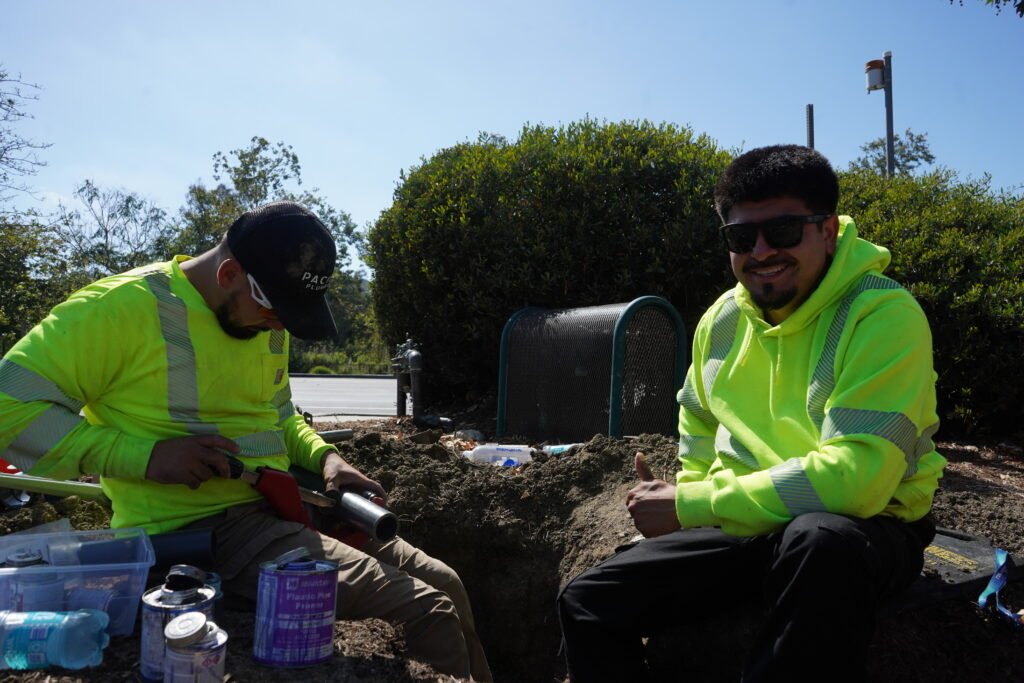
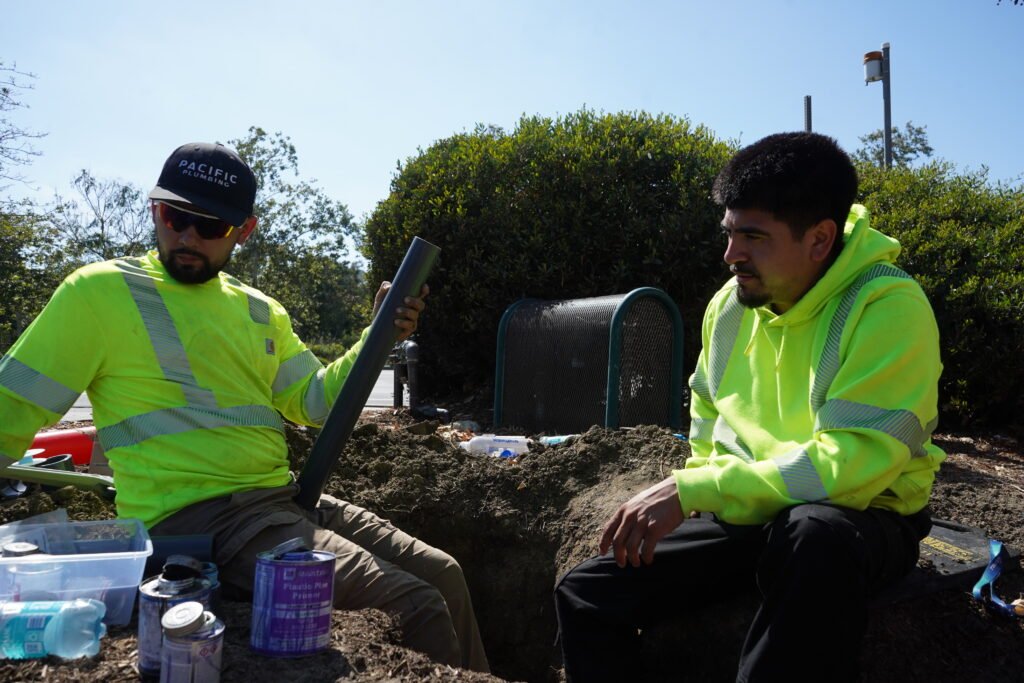
Pacific Plumbing LLC provides gas line service for San Diego properties.
Once emergency responders or the utility make the site safe, the plumbing evaluation can focus on the customer-owned system.
That may include appliance connections, visible gas piping, shutoff valves, pressure testing, pipe sizing, damaged sections, and repair planning.
Related services can matter when gas appliances connect to other plumbing systems. Water-heater services and tankless-water-heater work may involve gas supply, venting, water connections, and equipment sizing.
For additional background on how hard water can affect water-heating equipment, see water heater warning signs.
Never Wait for a Gas Leak to Become Obvious
A gas leak does not need to roar or fill the house with odor before it becomes dangerous.
One faint smell, an unexplained hiss, damaged piping, or symptoms indoors is enough to leave.
Do not test switches. Do not open windows. Do not search for the source.
Evacuate, move away, and call 911 or SDG&E from a safe location.
After the emergency is controlled, Pacific Plumbing LLC can inspect customer-owned gas piping, explain the repair options, and complete gas-line work that is properly tested before service returns.
Frequently Asked Questions
What does a gas leak smell like?
Odorized natural gas is often described as rotten eggs, sulfur, or skunk-like. Do not rely on smell alone.
Should I open the windows if I smell gas?
No. Leave immediately by the nearest safe route. Do not remain inside to ventilate the property.
Can I use my phone to call while inside?
No. Call 911 or SDG&E only after reaching a safe location.
Should I shut off the gas meter?
Do not operate utility equipment unless emergency responders or the utility direct you.
Can I check a suspected leak with soapy water?
Not during an active suspected leak. Evacuate instead. Professionals may use approved leak-detection solution during controlled testing.
Does a carbon monoxide alarm detect natural gas?
Usually not. Use only alarms specifically listed for the hazards named on the device.
Is a yellow stove flame proof of a gas leak?
No. It may indicate a combustion or burner problem. Gas odor or other emergency signs still require evacuation.
Can a gas leak make you sick?
Natural gas can displace oxygen. Faulty combustion can also produce carbon monoxide. Leave and seek medical help for symptoms.
Can pets detect gas before people?
Pets may react to odor or exposure, but their behavior is not a substitute for alarms or professional testing.
Why would vegetation die over a gas line?
Escaping underground gas can affect soil oxygen around roots. Irrigation and plant disease can look similar, so do not investigate by digging.
Who should I call first for a gas leak in San Diego?
From a safe location, call 911 or SDG&E. Call a licensed gas-line professional after the immediate hazard is controlled.
Can a plumber turn my gas back on?
Restoration requirements depend on the utility, repair, permits, and inspection. Never restore gas service yourself.
How are hidden gas leaks found?
Professionals may use combustible-gas detectors, pressure testing, isolation, approved leak-detection solution, and inspection of connections and appliances.
When should old gas piping be replaced?
Replacement may be recommended for serious corrosion, repeated leaks, unsafe materials, poor routing, damage, or inadequate sizing.